Wedding Emcee Tips: How to MC a Reception
A wedding emcee runs the reception from grand entrance to last dance: introducing the wedding party, calling toasts in order, keeping the timeline on track, and stepping in when something goes sideways. The job is less about jokes and more about logistics, coordinating with the DJ and caterer so speeches, meals, and dances happen on cue. Plan for roughly 7 to 10 hours of commitment on the day, a clear toast order, and a backup plan for anything that runs long.
On this page
It's 7:45 and the best man's toast is still going. The kitchen is holding the entrees, the DJ keeps checking his watch, and the room is starting to lose its spark. That's the moment a wedding emcee earns their keep. The job isn't stand-up comedy with a microphone in hand, it's the person holding the whole night together, from the first toast to the last dance.
The role has less to do with landing jokes and more to do with logistics. The most common slip-ups for first-time wedding emcees aren't about the crowd, they're about coordination: forgetting or mispronouncing names, skipping the pre-event meeting with the couple, or leaving the DJ and catering team guessing about cues, according to marryusgary.com's guide to emceeing a wedding.
This guide walks through a full reception timeline, the classic toast order, what a professional emcee costs versus doing it yourself, ideas for keeping the energy up between courses, and the rookie mistakes worth steering clear of.
Whether you're the best man, a sibling, or a close friend who just got asked, you don't need to be the funniest person in the room. You need a plan, a little structure, and tools that make it easy to keep the crowd with you all night.
What Does a Wedding Emcee Do?
A wedding emcee's job really comes down to one planning meeting and a handful of cues on the day, according to marryusgary.com's rundown of the role:
A Wedding Emcee's Core Duties
In practice, that makes the emcee the single point of contact for the whole evening: checking in with speakers before handing them the mic, watching the clock during dinner, and giving the DJ and caterer a heads-up before every transition.
The Reception Timeline, Moment by Moment
Plan on a longer day than just the reception. Most wedding emcees commit roughly 7 to 10 hours total, covering the rehearsal, setup, ceremony, and the full reception, per marryusgary.com. Here's how a typical reception program breaks down.
A Sample Wedding Reception Timeline
Grand Entrance
The emcee introduces the newlyweds as they enter the reception, kicking off the applause and setting the tone for the night.
Welcome and First Toasts
A short welcome from the emcee leads into the first round of toasts before or during the appetizer.
Dinner Service
The meal is served. This is a natural pause with no toasts, so guests can actually eat.
Cake Cutting
Dessert arrives alongside its own small moment: the cake cutting.
First Dance and Parent Dances
The couple's first dance, followed by parent dances, opens the floor for everyone else.
Bouquet and Garter Toss
Classic reception games like the bouquet and garter toss keep the energy up once the formal moments are behind you.
Open Floor and Late Night
The emcee closes out the official program so the rest of the night can shift into open dancing.
Keep the mic time short between each of these moments. As one wedding-emcee guide puts it, "you are not the entertainment, you are the host", so long transitions do more harm than a slightly rough joke.
What Order Do the Toasts Go In?
A commonly used US toast order runs like this, according to marryusgary.com:
Order | Speaker |
|---|---|
1 | Father of the bride |
2 | Groom |
3 | Best man |
4 | Maid of honor |
5 | Bride |
Want to go deeper on toast order, how to divide up speaking time, and how to brief each speaker beforehand? See our complete guide to wedding speech order.
Hire a Professional Emcee or DIY? Here's What It Costs
Plenty of couples wonder whether to hire a professional emcee or hand the mic to a friend. Professional pricing varies with hours and whether you're bundling in a DJ, according to djwillgill.com's pricing breakdown:
Option | Typical Cost |
|---|---|
Friend or family member | No professional fee, just their time |
Emcee only, 4 hours | $1,500 |
Emcee only, 7 hours | $2,500 |
Emcee and DJ combined, 4 hours | $2,500 |
Emcee and DJ combined, 7 hours | $3,500 |
There's no single right answer. A friend or family member who knows the couple well brings warmth and a personal touch, and costs nothing beyond their own prep time. A professional emcee takes on the full logistics instead, so nobody in the family has to juggle a run sheet and a microphone during their own relative's wedding. Whichever way you go, the same fundamentals decide whether the night feels smooth: a clear timeline, a toast order everyone agrees on, and someone who owns the plan if something goes wrong.
Games and Energy: Keep the Room With You All Night
Games should serve the mood, not hijack it. Talk to the couple ahead of time about what they actually enjoy. Some couples love classic wedding games and a little friendly embarrassment, others tense up the moment they're pulled up in front of a crowd. Let the game fit the couple, not the other way around.
- Pick games that fit this specific couple, and just ask them directly ahead of time
- Spread activities across the night instead of stacking everything into one stretch
- Always have a backup plan in case the tech glitches
- Let guests join in from their own phones instead of dragging people on stage against their will
For more game and activity ideas that work at any wedding, see our roundup of the best wedding reception games.
What actually decides whether an activity works isn't the game itself, it's how easy it is to run without chaos. The less equipment involved, the less that can go wrong, and the faster you're back to dinner and toasts.
The Emcee's Control Panel: Run the Quiz, Photo Wall, and Song Requests From the Podium
Here's the part of the job that tends to stress emcees out the most: the tech. Running a live quiz on the big screen, collecting photos and song requests from eighty guests, and keeping the toast order straight, all at once? With Lane of Memories, all it takes is one QR code on the tables. Guests scan it with their own phone camera, no app, no login, and everything lands in a single control panel you run from the podium with one keypress.
Everything an Emcee Needs, in One Place
Live Quiz With a Leaderboard
Set the quiz up ahead of time, then run it live on the big screen with a single keypress. The winner gets a trophy and confetti.
Photos and Greetings on the Big Screen
Guest photos and written greetings show up as a live slideshow running throughout the party.
Song Requests via Spotify
Guests send in song requests straight from the table, integrated with Spotify.
Everything Lands in One Digital Guest Book
Photos, greetings, and song requests collect automatically into one album you can revisit long after the wedding.
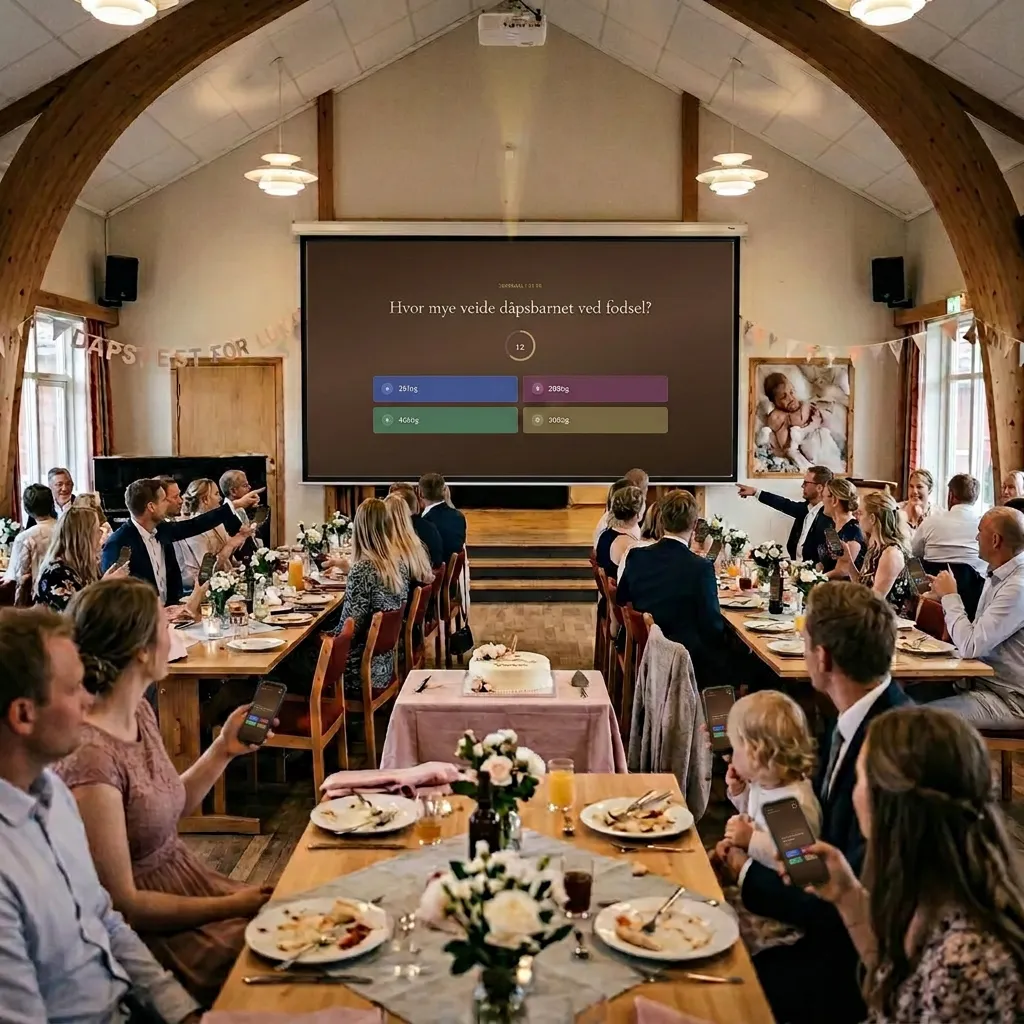
One Quiet Beat
The lights dim. Every eye turns to the screen.
Then the Room Erupts
The right answer pops up, someone cheers, someone protests in good fun, and the whole table cracks up.
The Winner Is Crowned
Trophy and confetti on the big screen, while guests who've never met before high-five over the same team.
And the Party Is Really On
This is the moment the emcee was working toward all night.
Common Rookie Mistakes to Avoid
Most emcee mistakes trace back to a handful of repeat offenders, according to marryusgary.com and theeventbible.com.au. Here's what to steer clear of:
Rookie Mistakes to Steer Clear Of
The Wedding Emcee Job in Numbers
A wedding emcee's work doesn't get noticed because it's flawless, it gets noticed because nobody in the room is thinking about the clock. With a clear timeline, a toast order everyone knows, and tools that make it easy to keep the energy up between courses, you're well set up to give the couple exactly the night they pictured.
Sources
Frequently asked questions
What does a wedding emcee do?
A wedding emcee coordinates the toasts and entertainment, keeps the program on schedule, creates smooth transitions between courses and segments, and steps in as a buffer when something unexpected happens, like a toast that runs long or a guest who's had too much to drink. In practice that means meeting with the couple beforehand to lock the timeline, then handling the grand entrance, welcome, toast introductions, meal cues, first dance, parent dances, cake cutting, and reception games.
How long should wedding toasts be?
There's no single number that fits every wedding, but the rule repeated across emcee guides is to keep toasts tight: you're the host, not the entertainment, so a long-winded speech does more harm than good. A short, warm toast beats a rehearsed set every time, especially later in the night when attention starts to fade.
Who should emcee a wedding?
It should be someone the couple trusts to stay calm under pressure, often a close friend or sibling who's organized, clear on the microphone, and comfortable steering other people kindly but firmly. The role calls for planning more than stage talent.
What order do wedding toasts go in?
A commonly used US order runs father of the bride, groom, best man, maid of honor, and finally the bride. Couples can adjust this to fit their own wedding party, but it's a reliable default to start from.
How do you write a wedding reception timeline?
Start from the reception's big moments: grand entrance, welcome and first toasts, dinner service, cake cutting, first dance and parent dances, then games like the bouquet and garter toss. Build in buffer between segments so one long toast or a delayed course doesn't throw off the whole night, and loop in the DJ and caterer on cues ahead of time.
Related articles
Wedding Song Requests From Guests: The Full Playbook
A practical guide to wedding music: how to build the playlist, pick a first dance, and collect song requests from guests without the DJ booth turning into a line.
Wedding Toast Order: Who Speaks When (Full Guide)
Who gives the first toast at a wedding, and how long should each one run? Here's the traditional order, recommended toast lengths, and a ready-made timeline to copy into your reception.
Disposable Cameras at Your Wedding: Real Costs and the Alternative
What do disposable cameras really cost at a wedding, and how many keepable photos do you actually get? We ran the numbers on every way to collect your guests' pictures.