Wedding Speech Order: Who Speaks When (Full Guide)

The classic British order runs Father of the Bride, then the groom, then the best man, with many wedding hosts now recommending speeches before the meal rather than squeezed between courses. Keep each speech to three to five minutes, brief your speakers in advance, and copy the ready-made running order below straight into your own wedding day.
On this page
The best man half-rises from his seat, realises it isn't his turn yet, and sits back down to a ripple of awkward laughter around the top table. A few minutes of planning before the big day is usually all it takes to avoid that stumble.
Search for the right wedding speech order and the advice starts contradicting itself almost immediately. Some hosts swear speeches belong before the meal is served; older tradition tucks them in between courses instead. There isn't one rulebook every venue and every guide agrees on. What matters isn't which order you pick, it's that you pick one, brief your speakers, and let your toastmaster or master of ceremonies know well ahead of the day.
Below is the classic British running order, how long each speech should be, when in the day it happens, and a ready-made timeline you can copy straight into your own wedding.
The running order at a glance
Speaker | When | Recommended length |
|---|---|---|
Father of the Bride | Before the meal | 3–5 min |
Groom | Before the meal | 3–5 min |
Best Man | Before the meal | 3–5 min |
Modern additions (bride, mother, joint speech) | Before the meal, by agreement | 3–5 min |
The order and timings above come from Wayne Farrow's guide to wedding speeches, and are a solid starting point for most British weddings.
Who speaks first at a British wedding?
In the classic British line-up, the Father of the Bride goes first. He welcomes everyone, shares a few stories, and toasts the newlyweds, setting the tone for the rest of the speeches, according to Wayne Farrow's guide to wedding speeches. The groom follows, thanking guests, the wedding party and both families, and saying a few words about his new wife or husband. The best man closes the formal speeches with stories, humour and a few cheeky one-liners, per the same guide.
Plenty of modern weddings move away from that line-up altogether. There are no fixed rules any more: brides take the microphone, couples deliver joint speeches, and mothers step up to speak too, according to the same guide. If your wedding party doesn't fit neatly into the classic three, that's entirely normal. Just settle on an order in advance so nobody is caught out on the day.
Speeches before the meal, or between courses?
I always recommend doing the speeches before the meal. Get them out of the way, let the nerves settle, and then everyone can relax, enjoy their food.Wayne Farrow, wedding host
That's the strong recommendation from wedding host Wayne Farrow: hold the speeches before the meal is served, rather than squeezing them between courses, as he explains. Nerves settle early, the speakers get to relax and actually enjoy their own dinner afterwards, and the room isn't left waiting between mouthfuls for the next toast.
Splitting speeches up and slotting them between courses is generally discouraged, since it holds up service and breaks the flow of the meal, per the same guide. If you'd still like a short toast later in the evening, before the first dance for example, keep it brief and separate from the sit-down courses so the kitchen can keep working.
How long should each speech be?
Keep it simple: each speech at a traditional wedding should run three to five minutes, according to Wedding Forward. That's long enough to say something properly, and short enough that attention doesn't drift before the toast.
Keeping speeches on track
None of this needs to be complicated. A short run-through the day before, a printed copy of the order for the top table, and a quiet word with whoever's hosting is usually enough to stop the whole thing derailing when nerves and champagne inevitably kick in.
Few speakers or many — how do you adapt the list?
A small wedding rarely needs more than the classic three: a welcome and toast from the Father of the Bride, a thank-you from the groom, and a send-off from the best man. That keeps the formalities tight and gets everyone to the meal, and eventually the dance floor, without much delay.
Bigger weddings, or ones where the couple wants more voices heard, often add a bride's speech, a joint speech from the couple, or a few words from a parent. All of that is entirely normal on a modern British wedding day, since there's no fixed rulebook any more. Agree in advance who's speaking, in what order, and roughly how long each one will take, so your toastmaster can keep the room moving without any awkward pauses or duplicate toasts.
If the list is getting long, it's worth asking whether every voice needs the microphone at all. A short, warm word from a parent can land just as well as a written note read out by the toastmaster, and it keeps the formal running order from stretching on so long that guests start eyeing the bar instead of listening.
A running order you can copy
Running order for the speeches
Before guests take their seats
Test the microphone, brief your speakers on the running order, and let the digital slideshow start pulling in guests' photos on the big screen as they arrive.
Father of the Bride
Welcomes everyone, shares a few stories, and proposes a toast to the couple. Around 3–5 minutes.
The groom
Thanks guests, the wedding party and both families, and says a few words about his new wife or husband. Around 3–5 minutes.
The best man
Closes the formal speeches with stories, humour and a toast of his own. Around 3–5 minutes.
Any modern additions
A speech from the bride, a joint speech from the couple, or a few words from a parent, if you're including them. Agree the order beforehand so nobody's caught off guard.
Straight into the meal
With the formal speeches out of the way, guests can relax and enjoy their food without further interruptions.
Later in the evening
Once the meal is done and the tables are cleared, it's a natural moment for the evening's finale: a personalised song built from the couple's own answers, performed karaoke-style on the big screen with photos from the day.
Not everyone wants to take the microphone in front of a full room, and that's entirely fine. Many guests would rather leave a written message as part of the day's digital photo-sharing, so their words still reach the couple, just on screen instead of at the lectern.
How Lane of Memories works alongside the speeches
A live slideshow on the big screen
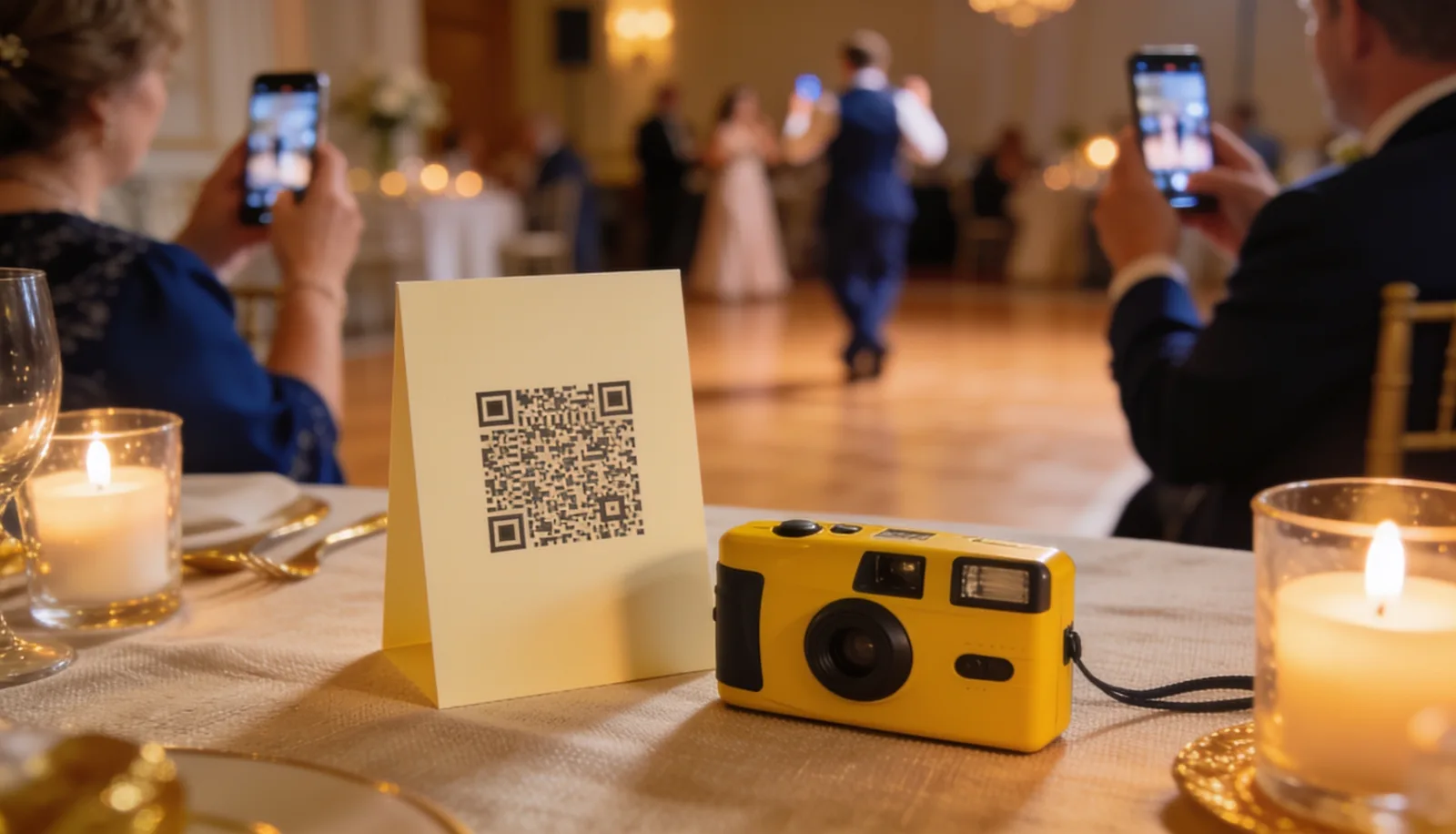
Photos and messages guests share via the QR code on the table appear on the big screen throughout the day, even while the speeches are going on.
A personalised song for the grand finale
Once the speeches are done, it's a natural moment to round off the formalities with a song built from the couple's own answers, performed karaoke-style with photos from the day. It can be downloaded afterwards.
A digital guest book for quieter guests
Guests who'd rather not speak can leave a written message instead. Everything lands in one album, open for 30 days after the wedding, with full-resolution downloads.
The last toast is raised
The laughter from the best man's speech settles. The room goes quiet for a moment before the music picks up.
Then the song begins
The answers the couple gave earlier become a song only they could have. Some guests laugh, some well up a little.
And the party carries on
Chairs get pushed back, the dance floor fills, and the day's photos keep rolling on the screen behind it all.
Whichever order you land on, a short heads-up to your speakers and a little buffer built into the day is what separates a wedding that flows from one where nobody's quite sure whose turn it is. Write the order down, share it with your toastmaster, and let the rest of the evening take care of itself.
Sources
- Wayne Farrow's guide to wedding speeches (waynefarrow.co.uk) – classic order, timing before the meal, and modern variations
- Wedding Forward's guide to wedding speech order (weddingforward.com) – recommended length for a traditional speech
Frequently asked questions
Who speaks first at a wedding?
In the classic British order, the Father of the Bride speaks first, welcoming guests, sharing a few stories and toasting the newlyweds. The groom follows with thanks to guests and family, and the best man closes the formal speeches with stories and humour. Plenty of modern weddings move away from this line-up altogether, with brides, joint speeches and mothers all taking the microphone too.
How long should a wedding speech be?
Each speech at a traditional wedding should run around three to five minutes. That's enough time to say something properly without losing the room, whether it's the Father of the Bride's welcome, the groom's thank-you, or the best man's send-off.
Should speeches be before or after the meal?
Many wedding hosts recommend holding speeches before the meal rather than splitting them between courses, since it lets nerves settle early and means guests can enjoy their food without interruption. Slotting speeches between courses is generally discouraged, as it holds up service for the whole room.
Does the best man have to give a speech?
No, there's no rule that says the best man has to speak. The role is really about supporting the couple practically and emotionally throughout the day. A best man who'd rather not take the microphone can leave a written message in the digital guest book instead, so his words still reach the couple.
How do we create a wedding speech running order?
Start by listing who's speaking and roughly how long each speech will take, then agree the order with your toastmaster or master of ceremonies well before the day. Brief your speakers on the timings in advance, and use the running order earlier in this guide as your starting point, adjusting it to suit your own speakers and wedding party.
Related articles
Wedding Song Requests From Guests: The Complete Guide
A practical guide to wedding music: building the playlist, choosing your first dance, and collecting song requests from guests without chaos at the DJ booth.
Wedding MC Duties: The Complete Toastmaster Guide
What a wedding MC actually does, how to build a run sheet from welcome to send-off, the rookie mistakes to avoid, and what a UK toastmaster costs if you'd rather hire one.
How to Collect Wedding Photos from Guests: 4 Methods Compared
What does it really cost to collect wedding photos from your guests — and how many usable shots do you actually get? We costed all four common methods.